

-
- How to Add a User to a Joomla Group Programmatically
- How to Send Emails in Joomla with PHP
- How to Connect to an External Database in Joomla with PHP
- How to Check If the Current User is Super User in Joomla with PHP
- How to Check if the Current Page Is the Homepage in Joomla with PHP
- How to Create a User Account in Joomla with PHP
- How to Create an Article in Joomla with PHP
- PHP Scripts Collection
Using Smart Tags
Use Smart Tags to insert dynamic data, like the page URL, the visitor's IP or the logged-in user's email, into any Tassos extension.
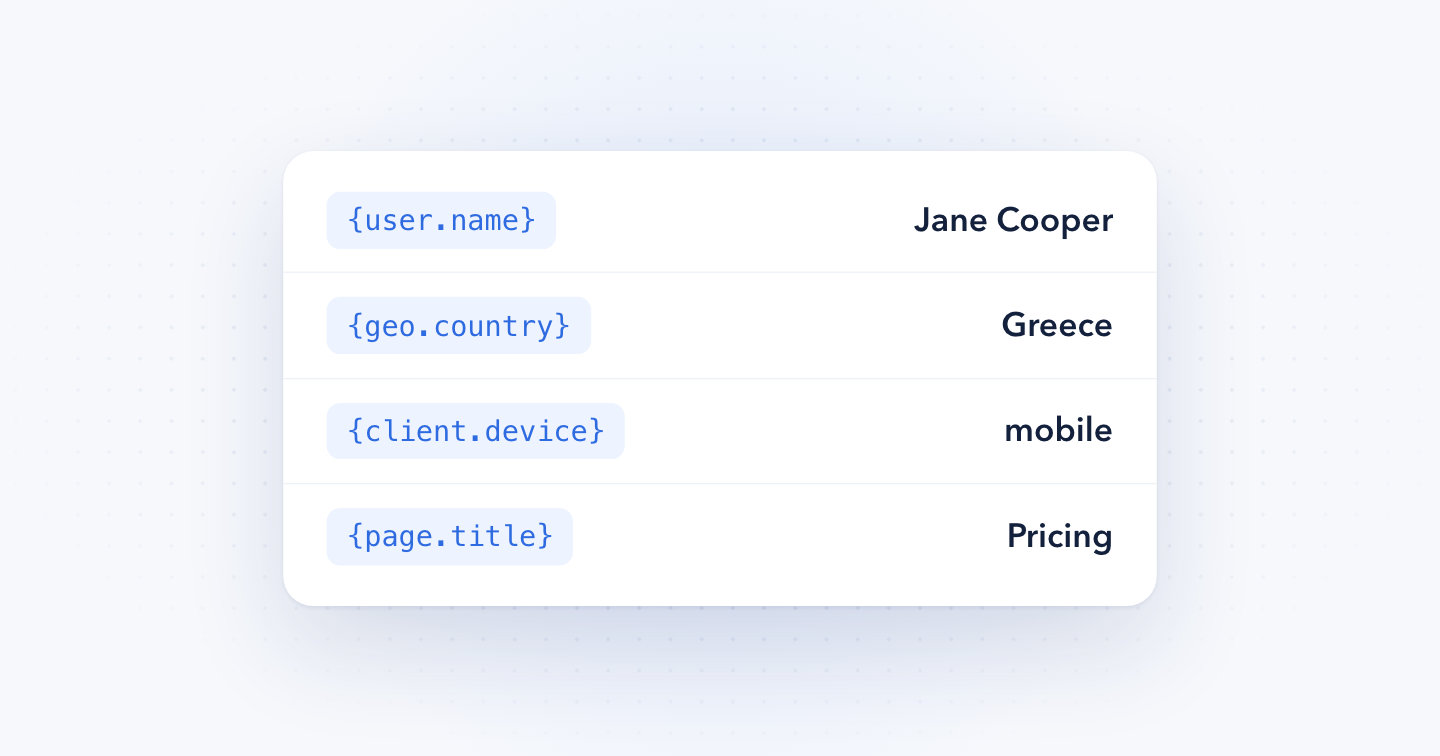
Do you want to capture or display additional user or site data on your site? It can be tricky if you need more information, such as the user's origin or the page URL, or want to capture the logged-in user's name or email address automatically. All of these things can be tracked efficiently with the help of Smart Tags.
This tutorial will show you how to use Smart Tags in Tassos extensions.
What is a Smart Tag?
A Smart Tag is a small piece of code that can provide you with valuable information about almost everything related to the moment when the page is rendered.
A Smart Tag can be identified by its enclosing curly brackets and the descriptive word(s) that are inside it. It looks like this:
{smart_tag}There's a variety of Smart Tags that can be used across all Tassos extensions.
- Date Time
- Visitor Technology
- Utilities
- Integrations
- AcyMailing
- Site
- Article
- Menu Item
- Page
- URL
- QueryString
- User Account
- Geolocation
- User Profile
- Custom Fields
Smart Tags rules
- You can use nested Smart Tags.
- You can use the same Smart Tags multiple times on the page without worrying about performance issues, as Smart Tags use caching.
- You can change a Smart Tag's output with modifiers, for example to wrap it in HTML or filter it.


 Rated: