

Unlock this and dozens of other powerful features by upgrading to Google Structured Data Pro.
Unlock this feature
-
- DJ-Catalog2
- DJ-Classifieds
- DJ-Events
- DPCalendar
- EasyBlog
- Eshop
- Event Booking
- Gridbox
- HikaShop
- iCagenda
- J2Commerce
- JBusiness Directory
- JCal Pro
- JEvents
- Joomla Articles
- Joomla Menu Manager
- JoomShopping
- JReviews
- K2
- OSCampus Structured Data
- Quix Page Builder
- RSBlog
- RSEventsPro
- SEO Glossary
- SobiPro
- SP Page Builder
- VirtueMart
- YOOtheme
- ZOO
-
- Troubleshoot Structured Data not Added to the Page
- Troubleshoot Structured Data not Identified by the Google Rich Results Tool
- Troubleshoot Structured Data not Showing in Search Results
- Preview button not showing on Structured Data Testing Tool
- I am seeing the "is not a known valid target type for the identifier property" error
- Fixing Error decoding JSON data in Joomla Articles
- Fix missing Google Structured Data tab in the Article Editing Page
-
- How to map schema properties using CSS Selectors
- How to Export and Import Google Structured Data Items
- HTML to Markdown Conversion
- Adding Facebook Open Graph Meta Data
- Site Representation Settings
- Use Structured Data for Google Merchant
- Create Multilingual Structured Data Items
- Use the Custom Code Content Type
- Prepare Content option
- Using the Schema Cleaner
Joomla Menu Manager Structured Data
Add structured data to specific menu items in Joomla. Target exactly which pages need schema markup. Control structured data across your entire Joomla website easily.
Joomla Menu Manager Structured Data is available in Pro
The Menu Manager Integration gives you the ability to assign any Content Type (e.g. Article, Product, etc) to any of your existing Menu Items except the URL and Menu Item Alias types.
When to use it
There are two main reasons why the Menu Manager Integration is exactly what you should be using and those are the following.
Pages consisted entirely by modules
There are scenarios where your page is 100% created by modules and therefore there is no component behind them to provide a traditional scenario for one of the other integrations.
Add Structured Data to yet unsupported extensions
Since the integration list is still growing with a long list of extensions waiting to be integrated, you can bridge the gap between now and the day your integration will be ready by using the Menu Items which could be created by your particular extension. Surely, for some this will be proven enough to not even have to wait for a special integration!
How to Enable the Menu Manager Integration
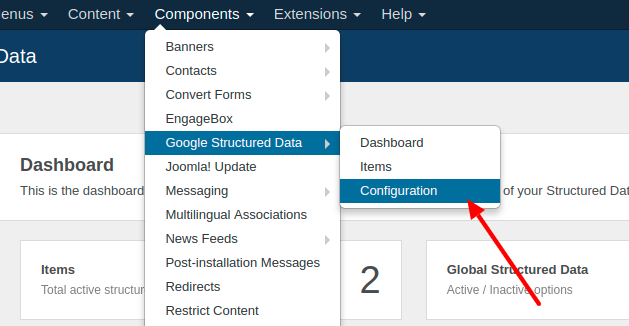
As with all of the integrations, you need to go to Components → Google Structured Data → Configuration
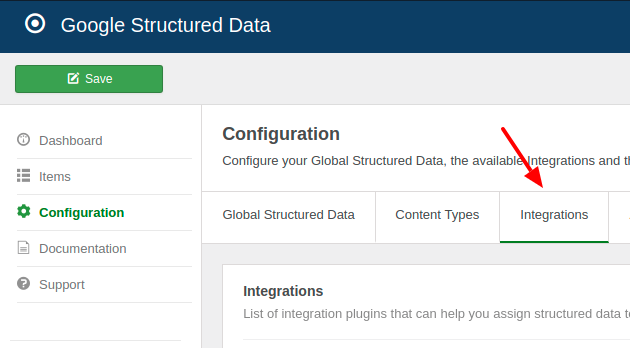
Then, open the Integrations tab, where all the integrations are listed.
Find the Menu Manager Integration in the list below and make sure that you enable it by clicking the button where the arrow is pointing in the screenshot below so that it changes to a green checkmark.

How to assign a Content Type to a Menu
There are two methods to assign a Content Type to a Menu.
Via The Fast Edit Method
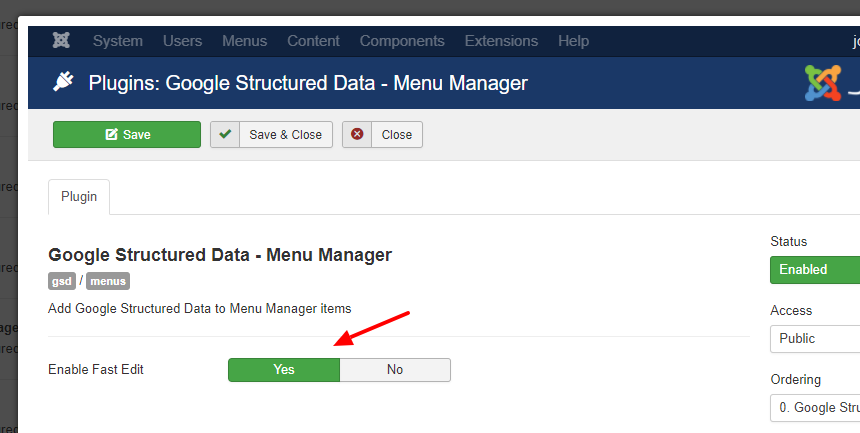
Before you start using the Fast Edit Method you need to enable it from within the integration. To do that, click the Options (gear) button next to Menu Manager to open the Edit Integration window, turn on Enable Fast Edit and click Save, as shown in the screenshot below.
Now that the Fast Edit method is enabled you have the ability to directly assign a Content Type to a Menu Item via the Menu Item Edit Screen as shown in the screenshot below. The Google Structured Data tab appears only on component-based menu items.
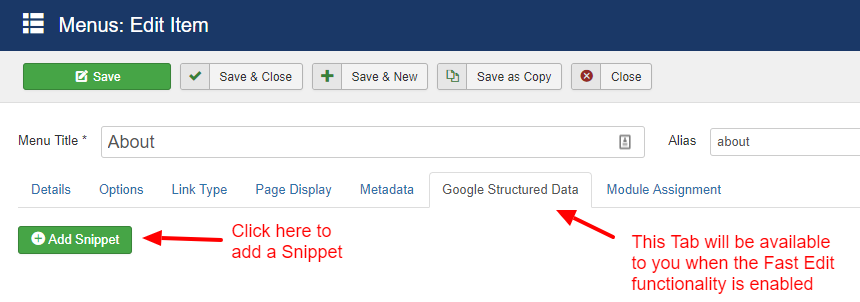
Click Add Structured Data and choose a content type from the dropdown. A popup opens with the form for that content type, with the menu item already selected.
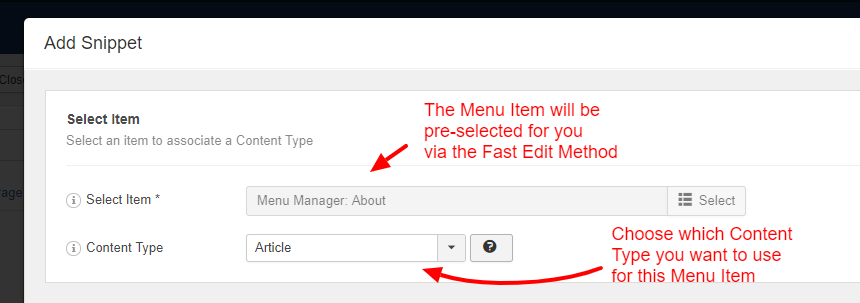
Via the Component's Items Manager
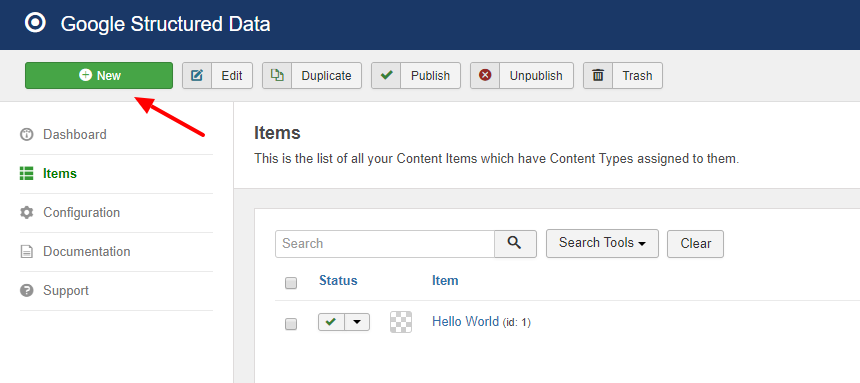
This is the traditional method which can be followed for all the integrations. Just go to Components → Google Structured Data → Items and click New as shown in the screenshot below.
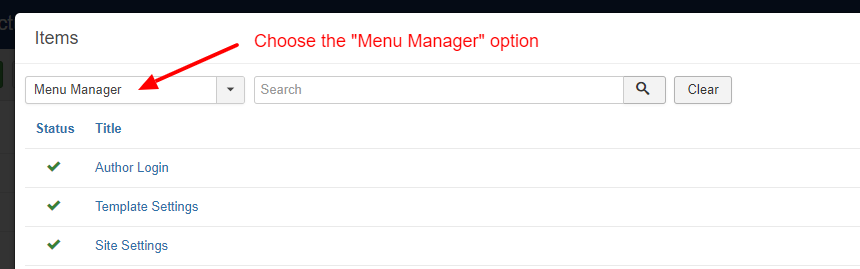
Select Menu Manager in the Integration dropdown and save the item.

Then pick your menu items in the Menu Item rule under Publishing Rules, as shown in the screenshot below.
Differences for Content Types between other Integrations
Due to the special nature of this Integration, some distinct differences are in place in terms of defaults and available options.
For all the Content Types the defaults for the following fields are different.
- Title: uses the menu item's Browser Page Title (on the Page Display tab), or the menu title if that's empty.
- Text: uses the menu item's Meta Description (on the Metadata tab).
- Image: This field's default is the "Link Image" in the Menu Item's Link Type Tab
Some mapping options aren't available with this integration because a menu item doesn't store that data: Rating Value, Review Count, the date and author options, Intro Text and Full Text. Use Custom Value for these properties instead.

Important Notes
- The only Menu Item Types which can not be accompanied with Structured Data is naturally the URL and Menu Item Alias types.
- It's important to remember not to use the Rating option for your Home Menu Item because Google issues warnings which turn into penalties for "Spammy Structured Data".
Joomla Menu Manager Structured Data is available in Pro
Unlock this and dozens of other powerful features by upgrading to Google Structured Data Pro.
Unlock this feature
Last updated on Oct 15th 2026 17:10
Schema and Structured Data Extension for Joomla
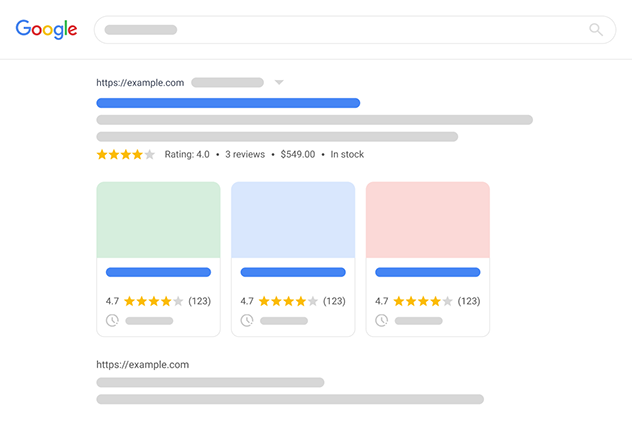
Markup your content with structured data and enhance the appearance of your website with rich results. Boost Joomla SEO in a few clicks.

Tassos offers a premium suite of Joomla extensions with 7 products and over 2.4 million downloads, providing reliable solutions since 2014.


 Rated:

Copyright © 2014 - 2026 - Smile Motive Development LP. All Rights Reserved.